Hollywood Deepfake: How AI is Changing What We See at the Movies

When the movie As Deep as the Grave premieres, Val Kilmer will appear in a third of the film, even though the A-list actor never appeared on set for a single shoot.
While he had been cast to appear in the film in 2020, the Batman Forever, Tombstone and Top Gun actor died of throat cancer in 2025 before any of his scenes were shot. But Kilmer’s family granted writer director Coerte Voorhees permission to use AI so the film could feature a younger, healthy Kilmer.
“According to public accounts, the family fully supported it as a way to remember and honor his craft,” said Michael Chang, an adjunct lecturer in the Accounting and Law area.
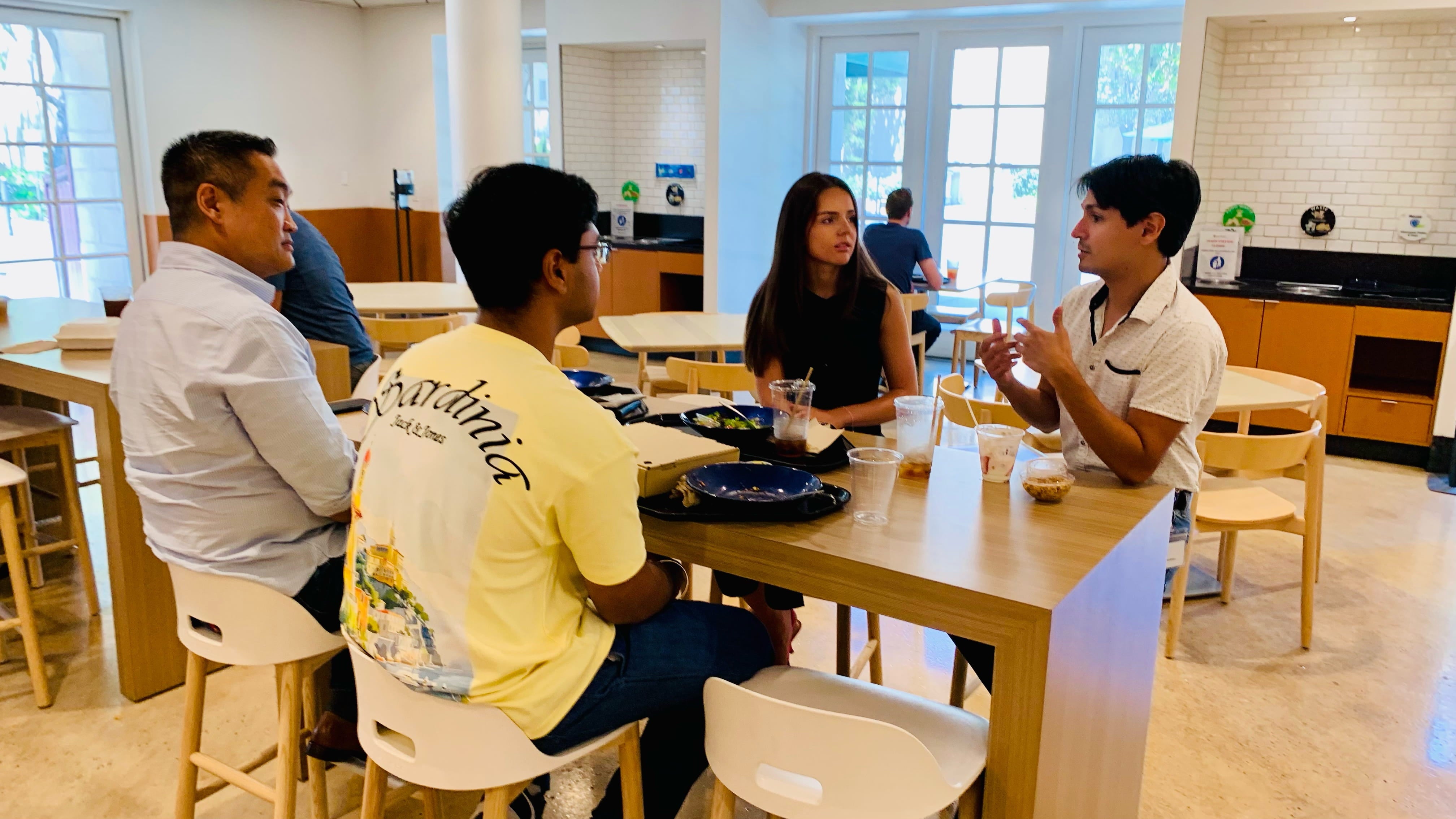
Chang, who is also an entertainment attorney with 25 years of experience in the industry, recently mentored two students on research that explores deepfakes — hyper-realistic images created with AI technology — in film. The research was conducted during the Summer Undergraduate Research Program, which pairs faculty and students for relevant research.
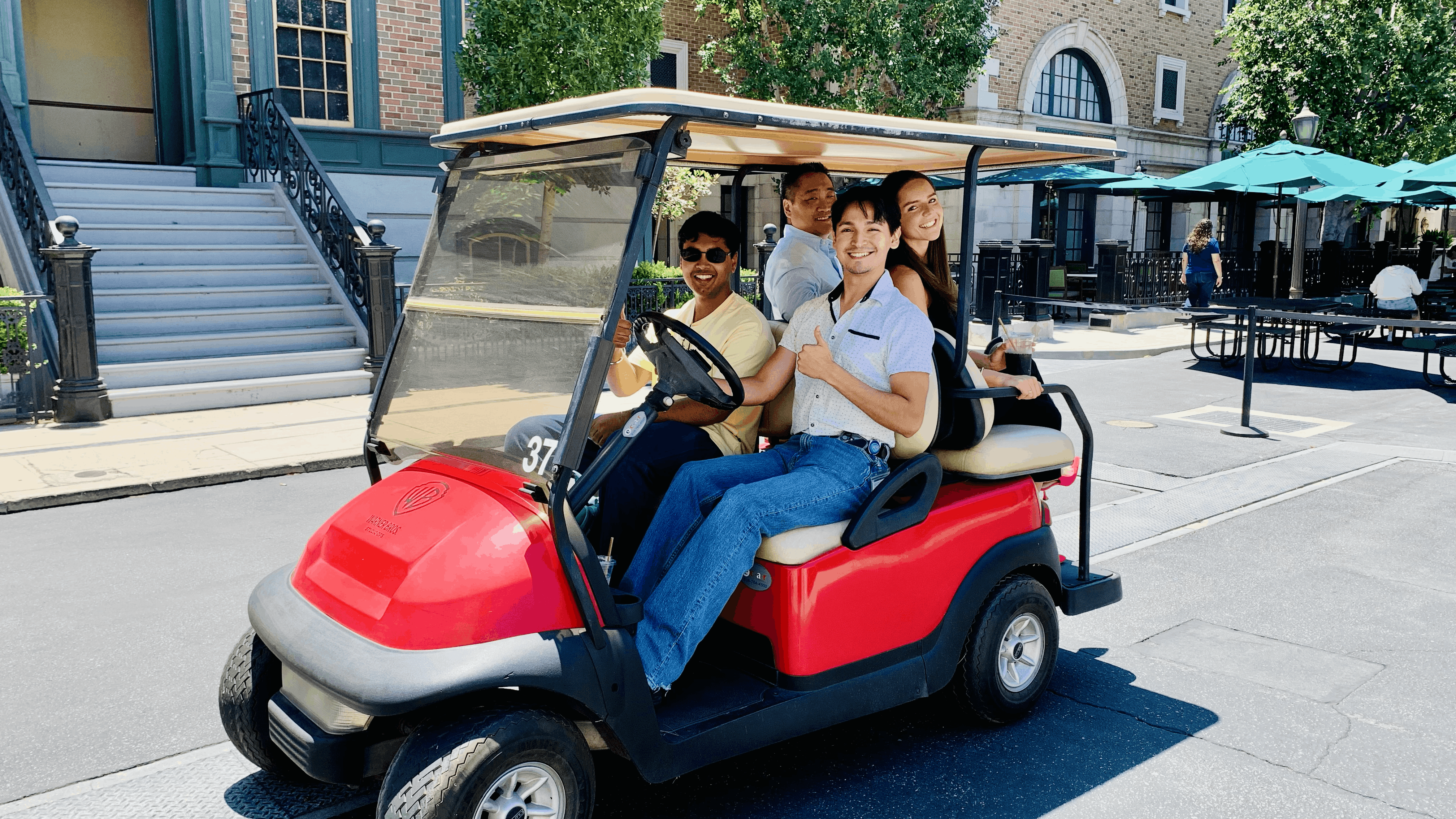
Adding to the experience, Chang also invited the students to the Warner Bros. studios in Los Angeles, where he works as vice president of business and legal affairs. There students heard directly from industry professionals, met with Robert Kang, a cybersecurity expert, academic and attorney, and were provided a tour of the Warner Bros. backlot, gaining practical, Learn by Doing access into the craft of filmmaking.
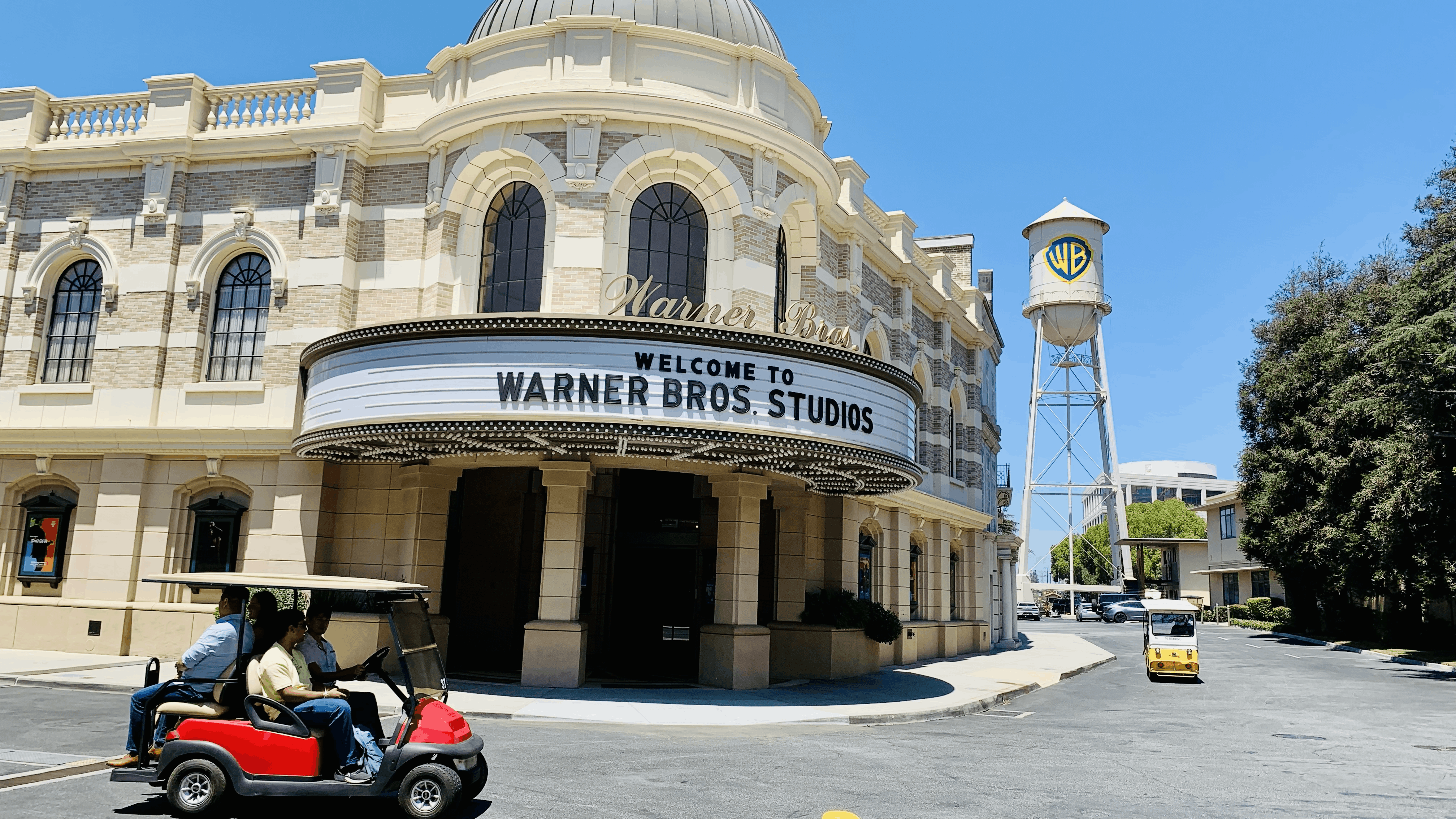
“It felt like I was in some historic city,” said economics major Ashwin Vasant, one of the students involved in the research. “Because our tour guide, whichever street we turned on, he’d be, like, ‘Oh, did you guys know Spider Man was on that building right there?’ or, ‘The street we’re driving on, this is where Jim Carrey was doing his famous scene in Mask, where he’s making all the police officers dance.’”
Speaking as an Orfalea College of Business faculty member and not on behalf of Warner Bros., Chang said AI is a hot topic in Hollywood.
“When you look at it as a utilitarian, deepfakes might be good because they would save on cost of production and get more content out there,” Chang said. “But then it’s bad for the individual actors and actresses because they’re potentially losing jobs. Their livelihood is at stake, and that makes it very important for all involved."
While AI could threaten jobs in the industry, there is a legal aspect that might prevent large-scale job losses.
“Under current laws in most jurisdictions, AI-generated content can’t be protected by copyright law,” said Chang, whose legal work and research intersects with AI. “What this means is that works generated by AI aren’t subject to certain legal protections, enforcement.”
The SURP research specifically looks at the potential benefits and drawbacks of AI in entertainment, including ethical and copyright considerations.
AI has already had an impact on movies: Martin Scorsese’s The Irishman (2019) used AI to make Robert DeNiro, Al Pacino and Joe Pesci look decades younger. And for The Brutalist (2024), filmmakers used AI to enhance actor Adrien Brody’s Hungarian accent.
More recently, Hollywood has taken AI technology even further. Tilly Norwood, an AI-generated actress, will actually star in an upcoming comedy-drama, Misaligned.
“If you look her up, she has a full Instagram, she has performances and audition tapes that people can download and use,” said marketing student Ryleigh Fitzsimmons, who was also involved in the research. ”You can go onto her LinkedIn profile and then send in what you want her to do.”
While that might not seem protected under copyright law since Norwood is generated by AI, the film might be if it entailed significant human content creation.
“There’s a lot of generative AI content that’s either being edited by humans or there’s human-generated output that’s being put into generative AI,” Vasant said. “This could raise a lot of confusion, especially if film studios are going to use or adapt generative AI more. So what I’m trying to see is, all right, this is the current gray area that’s happening – what are some ways to fix it?”
Computer-generated imagery (CGI), for example, might incorporate elements of AI, but there’s also a lot of human work involved using 3D software. And in some movies, AI might just be a smaller part of a film that entails plenty of human effort.
In the Kilmer case, the film includes real actors and crew working with a human-crafted script. Meanwhile, production adhered to Screen Actor’s Guild guidelines, and the actor’s estate was compensated for the AI appearance.
To portray him as a Catholic priest and Native American spiritualist for the movie, Kilmer’s image was created using images throughout his lifetime and recorded samples of his voice.
“They were able to go onto AI and have programmers generate an entire script for him, using his voice, his image, and likeness,” Fitzsimmons said.
Fitzsimmons, who is pursuing a public policy minor, plans to attend law school. She was originally considering a legal career focused on medical malpractice, personal injury or sports contracts, but the SURP project has inspired her to consider entertainment law — particularly with the opportunities posed by AI.
“There are so many different areas to explore,” she said. “I think it’s going to be the next huge thing, and they’re going to need lawyers because there’s no black or white with this.”
While visiting the Warner Bros. lot, Kang, who advises multi-national companies on advanced technical concepts, spoke with the students about AI and cybersecurity risks. Kang also joined the students on a private tour given by a facilities manager Jake Ortega, an independent filmmaker himself.
“When you look at it as a utilitarian, deepfakes might be good because they would save on cost of production and get more content out there. But then it’s bad for the individual actors and actresses because they’re potentially losing jobs.”
-- Michael Chang
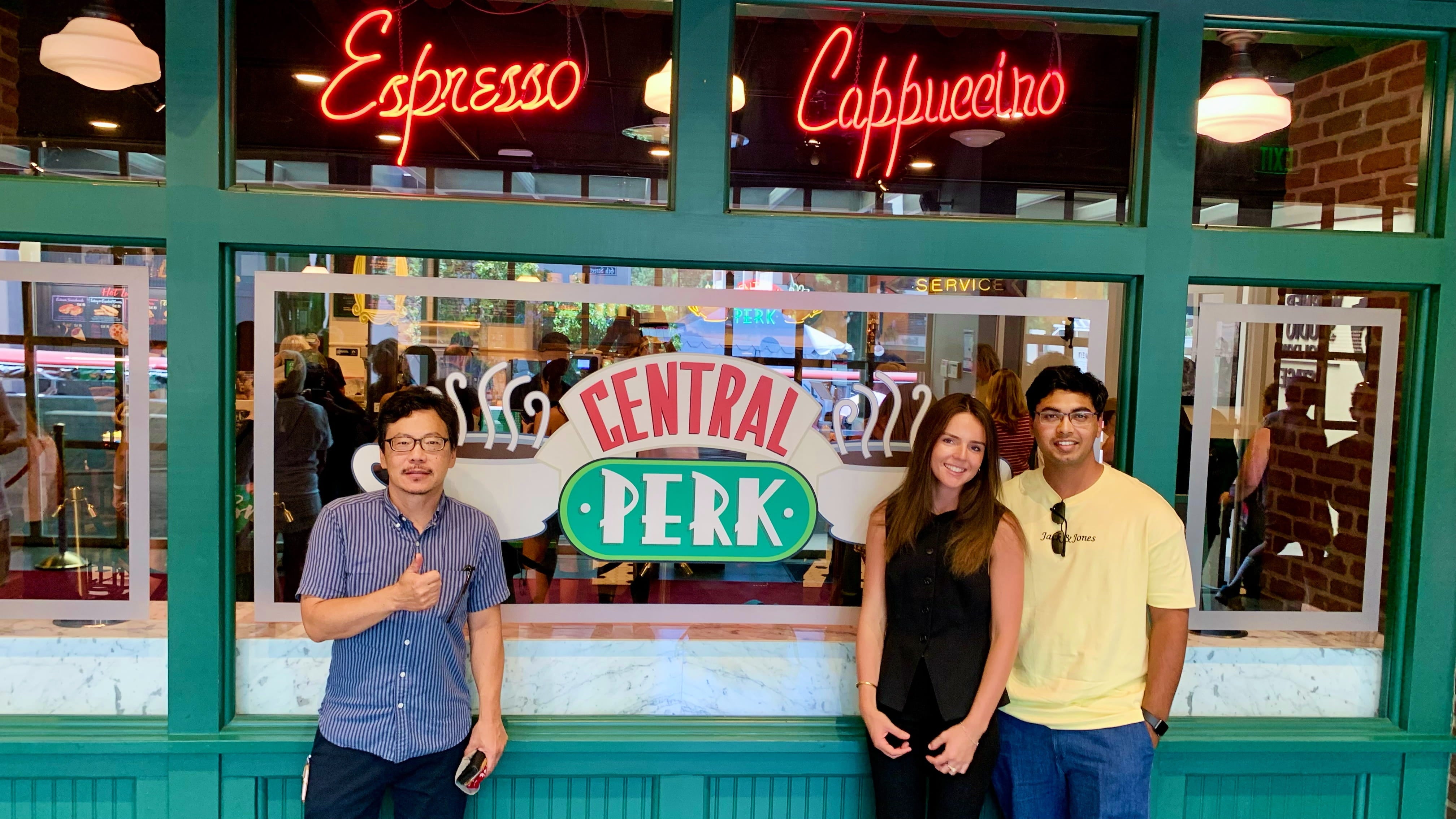
The tour included a stop on the set for Central Perk, the coffee shop characters frequented regularly in the sitcom “Friends.” The students even sat on the couch where the characters filmed many memorable scenes.
Even though the sitcom aired its final episode in 2004, the students were familiar with their Central Perk surroundings.
“That’s the only show I watch on repeat,” Fitzsimmons said.
Fitzsimmons lives in Orange County, where she interned with a law office over the summer. Vasant traveled several hours to the studio from his home in the Bay Area.
As a movie fan interested in AI issues, Vasant said this project was a nice fit.
“This opportunity allowed me to go into such in-depth research to the point where I feel like I can confidently speak about it when someone asks me about the ethical implications or the legal implications is using AI in filmmaking,” he said.
Students from all SURP projects will display their findings during the SURP Symposium, October 16.
Fitzsimons said she was especially excited to research a topic that is largely unchartered.
“AI in Hollywood is such an interesting topic, and it’s been really cool getting to learn so much about something that is actively developing and being able to apply what I’m learning,” she said.
Top photo: From left to right, Ryleigh Fitzsimmons, Michael Chang and Ashwin Vasant pose for a photo on the couch where "Friends" cast members filmed many memorable scenes. (Courtesy of Michael Chang)