
A New Direction: Many Orfalea College Graduate Students Come from Vastly Different Undergraduate Programs

As an undergraduate biology student and lab assistant at Georgetown University, Lily Steinberg spent hours in a wet lab studying taste receptors in the liver, research that eventually landed her a published paper in Frontiers in Physiology. Today as a graduate student in Cal Poly’s Orfalea College of Business, she pours over business analytics data instead of cells and mice.
“Non-traditional backgrounds broaden diversity of thought, which can lead to some exciting approaches and discoveries,” Steinberg said.
A college degree was once viewed as a single track leading to a predefined destination. Today however, some of the most compelling leadership paths are pursued by those who refuse to stay in a single lane, using non-business undergraduate backgrounds to gain business leadership skills.
Most students pick a major at 18, specialize in that discipline, graduate and then step into the workforce on a predefined career ladder. However, with a growing number of graduate students in business, the journey to their calling is a little more dynamic.
Making a master’s degree in business more appealing, Cal Poly’s Orfalea College of Business offers hands-on graduate programs in business administration (MBA), business analytics and quantitative economics.
Most of these master's degrees can be completed in just 10 months, offering small cohort sizes and direct career development. With a 97-percent job placement rate 90 days post-graduation and active recruitment from top Silicon Valley employers, Orfalea College proves that switching paths isn't a setback but a competitive launchpad.
Here are three students who came to the Orfalea grad program after earning a non-business bachelor's degree.
Lily Steinberg: Translating Data from Biology to Business Analytics
Starting in biology, Steinberg gained research experience across multiple scientific disciplines, from analyzing literature on big cats to studying taste receptors in the liver using wet labs. Her academic work helped her navigate complex data, experimental design and unexpected outcomes before she eventually pivoted into tech content marketing and business analytics.
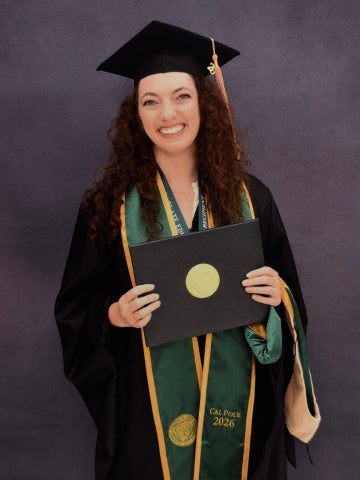
"That tiger research was closer to a literature review, where I synthesized facts from reputable online sources into an encyclopedia reference page," Steinberg said. "I made sure to corroborate info with multiple sources to better ensure accuracy. I spent a lot more time doing research in a wet lab in college, where I studied taste receptors in the liver using cells and mice, and it resulted in a paper published to Frontiers in Physiology that covered never-before-published findings. This taught me how so much of research is slow and nonlinear."
Steinberg’s journey shows how the skills she developed through complex research would apply to the business world, demonstrating how an undergraduate education can provide a foundation for many different career paths.
Driven by a fascination with the complex processes of life, Steinberg originally chose biology with a goal of pursuing science writing, translating intricate technical concepts into compelling stories for everyday readers. That ambition led her to National Geographic, where she worked in the legal department while freelancing and networking across the organization.
"Throughout this journey, I’ve always had an appreciation for data and translating it into insights, which maps well to the spirit of business analytics," Steinberg said.
Caroline Allman: Channeling Engineering and Athletics into Quantitative Economics
A former student athlete out of Castro Valley, California, Allman followed her family’s Mustang legacy to Cal Poly, where she logged 88 career appearances for the softball team. Over three seasons, she proved her versatility by transitioning between third base, second base and designated player, leading the team with 24 RBIs in 2023. Balancing a Division I schedule while earning her degree in environmental engineering honed the exact precision and focus she now brings to quantitative economics.
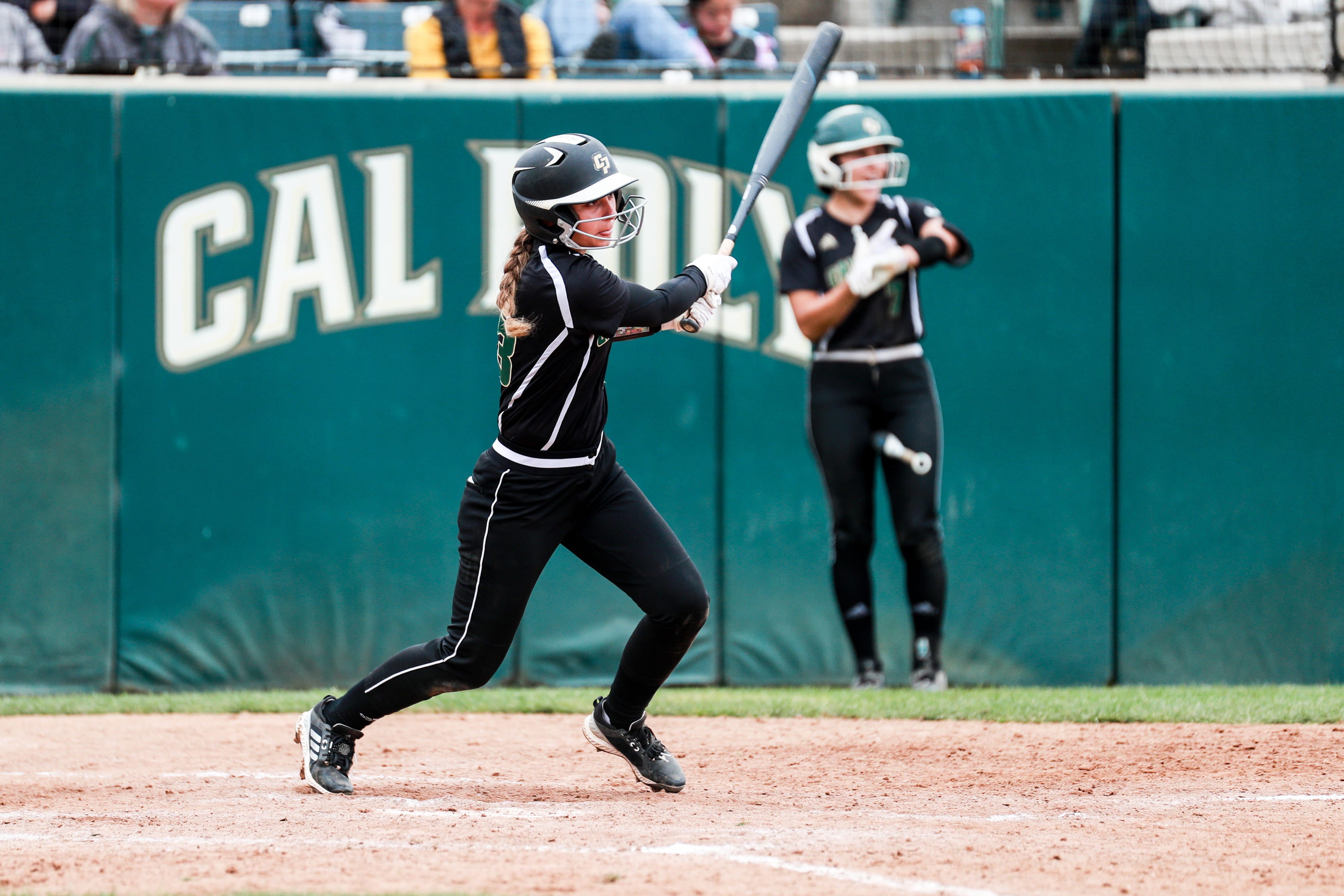
Transitioning from environmental engineering and Division I athletics into Cal Poly's master of science in quantitative economics (MSQE), Allman relied on her discipline, tenacity and athletic work ethic. Her pivot into quantitative economics and finance shows how analytical training in one field translates directly into new academic success.
"The decision you made when you were 18 years old does not need to be the same one you make at 22, or at any point in your life," Allman said. "(Changing your focus) can feel like a setback, but it just means we embrace the change and don't let the pressure stop you from leaning into your curiosity."
Heading into college uncertain of her exact career path, Allman chose environmental engineering to build a rigorous analytical foundation. By her junior year, ready to explore new disciplines, a campus notification about Cal Poly’s MSQE program caught her eye.
Though she hadn’t taken an economics course since her freshman year, the field felt like a natural fit, following in the footsteps of her father and grandfather, who both studied economics. Trusting her intuition, she embraced the pivot into quantitative finance, carrying the discipline from engineering and Division I softball straight into her graduate studies.
"At the end of the day, both engineering and athletics have taught me that I can do hard things and can work through problems if I put my mind to it," Allman said. "Additionally, they both taught me the value of asking for help or advice."
Annie Bosche: Bridging Creative Design and Account Strategy
With a foundation in graphic communication and an undergraduate concentration in management, Bosche always knew she wanted to blend business with design. Her experiences working as an account manager at University Graphic Systems, a student-run print shop at Cal Poly, and interning at an agency in Lisbon confirmed her true calling: the people side of creative work.

Recognizing that her passion lay at the intersection of client relations and strategy rather than strictly content creation, pursuing her MBA was the natural next step to build on that foundation.
"My design and communication foundation didn't close doors in business, it opened different ones,” she said. “My goal wasn't to leave my foundation, it's to figure out how it fits into where I'm going."
For creative minds like Bosche, being able to craft visual assets while managing accounts creates a seamless workflow that sets her apart in corporate settings.
"On a practical level, I can put together a pitch deck or create visual examples for a client without having to loop in someone else," Bosche said. "But more than that, having a creative foundation allows me to understand both sides. I can help translate what the client is envisioning and can translate that to a creative."
Top photo: Lily Steinberg, pictured in a graduation photo, studied lab mice as an undergraduate student, which helped prepare her for research as a graduate business student. (Photo: Courtesy of Lily Steinberg)
Your support for the Orfalea College of Business graduate programs provides students with an additional advantage in the workplace.


