
Changing the Landscape: Hamed Ghoddusi, Finance Professor, Discusses Balance Between Housing Needs and Open Space

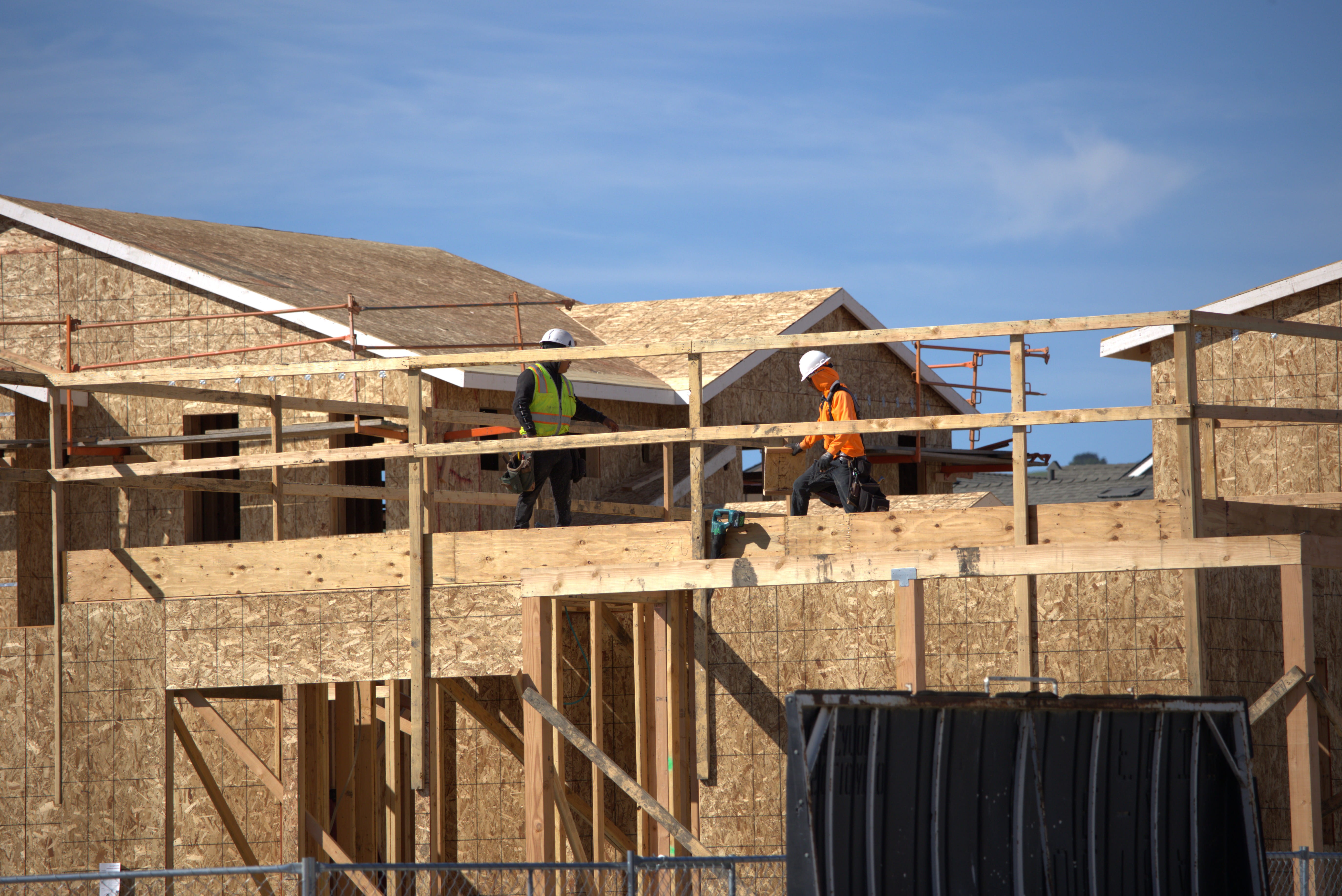
Today, the San Luis Ranch is a booming, mixed-use development featuring hundreds of homes and the popular SLO Ranch marketplace, located near a busy Target store that has become a mainstay for locals, visitors and Cal Poly students.
But when San Luis Obispo farmer Ernie Dalidio first proposed selling parts of his historic family farm for development in the early 1990s, the decision set off years of fierce debate, political battles and legal action, pitting pro-growth proponents against open space advocates.
Many opponents, who once rejected the development in a ballot initiative, argued that converting the farm, which had been in the Dalidio family since the late 1800s, would diminish some of the city’s “SLO Life” charm. Yet, others countered, development was necessary to address the needs of a growing community.
Ultimately, with any proposed development, a finance professor said, a balance is needed – as was the case with the San Luis Ranch, which still features a working farm and open space.
“Even if growth is justified, the answer is not random sprawl but careful and efficient expansion,” said Hamed Ghoddusi, associate professor of finance. “The challenge is to identify forms of growth that preserve scenic and agricultural value while also allowing new housing and community-serving uses.”
The San Luis Ranch, which smoothed the way for future agricultural land conversions in the city, is an example of a development Ghoddusi and other experts plan to discuss during the inaugural Real Estate Day, May 18, from 1-5 pm. This year’s summit, titled “Agricultural Land and Community Growth: Balancing Housing Needs, Agricultural Value and Open Space,” will feature an array of experts, representing the fields of real estate, housing, land use, planning and agriculture.
The event is hosted by the Real Estate Initiative (REI), a joint effort between the Orfalea College of Business and the College of Architecture and Environmental Design. We asked Ghoddusi, director of the REI, about the initiative and Real Estate Day.
This is the first Real Estate Day. What sort of topics do you think Real Estate Day will cover in the future?
We want Real Estate Day to become a platform that discusses regional topics as well as larger national and global trends in real estate, land use and housing. This year’s topic is deeply rooted in California’s housing and land-use challenges. Next year, we expect to explore more global themes, such as technology, AI and emerging real estate asset classes, including data centers and storage facilities.
How will the topics be chosen?
We choose topics through consultation with our stakeholders. We listen carefully to ideas from Cal Poly faculty, the board members of the Real Estate Initiative, our Founders’ Circle, guest speakers in RE classes and the Central Coast housing ecosystem. Our goal is to identify issues that are timely, consequential and worth a serious community-wide discussion.
How did the idea for this topic come about?
The topic was proposed during one of the Real Estate Initiative’s (REI’s) board meetings. We find it both relevant and timely as an important California issue: how to create more housing while preserving natural and agricultural land. Also, understanding the challenges that some growers are facing, we thought the event can discuss alternative pathways for landowners.
What factors went into choosing the speakers?
We wanted the speakers to reflect perspectives from different stages of the process. That is why we brought together people with direct experience in conservation, planning, land-use law, water law, development and the public sector. Every speaker was selected because they have firsthand, practical experience with these issues.
What research will be presented?
The event will include a framing presentation on the economics of converting agricultural land to community uses. Our goal is not to advocate one position, but to frame and highlight the trade-offs carefully: housing supply, affordability, infrastructure, public finance, environmental constraints, preservation and long-term community outcomes.
Why should we consider converting ag land for residential and commercial use?
California faces a severe housing shortage, and in many regions the shortage is too large to solve through infill development or upzoning alone. Research has shown that tight housing supply in California has had broader economic costs. Certain communities, including the Central Coast, are having challenges with services such as healthcare due to rising housing costs. Given that context, carefully planned conversion of agricultural land may be part of the solution. The question is not whether all such land should be converted, but when, where and under what conditions conversion may create substantial community benefits.
What controversies might we anticipate with this concept?
Any discussion of agricultural land conversion naturally raises strong concerns about sprawl, environmental impact, water availability, infrastructure burdens, new traffic, pressure on public infrastructure and the long-term loss of open space. Also, one may ask why not rely on alternative policies, such as higher density or adaptive reuse. These are serious concerns, and they deserve serious discussion. One purpose of the event is exactly to bring those trade-offs and risks into the open discussion and examine them carefully.
We do have local examples, such as San Luis Ranch, Avila Ranch and Righetti Ranch, which were controversial when first proposed. How have those places benefited the community?
Yes, several projects were subject to extensive public debate and legal battles before they were approved. However, some of these recent developments show that, when implemented thoughtfully, new projects can help address housing needs while also creating more walkable and sustainable communities. They can add homes, support local services and, in some cases, reduce the need for long daily car trips by placing people closer to jobs, schools and amenities. They can also bring new households to the community, which is important for keeping it vibrant and economically resilient.
What is the normal planning and zoning process required for converting ag land?
The process is typically long and complex. It may involve general plan amendments, zoning changes, California Environmental Quality Act (CEQA) review, infrastructure analysis, public hearings and, in some cases, Local Agency Formation Commission (LAFCO) or other agency processes. The exact pathway depends on the location and the nature of the project, which is one reason it is so important to have planners, lawyers, conservationists and public officials on our panels.
What are the limitations? For example, some open spaces do not have water available.
That is correct. Water is one of the most important constraints, but it is not the only one, nor is it the binding constraint in every case. Infrastructure, transportation access, environmental sensitivity, topography, wildfire risk and community acceptance all matter. In many cases, those constraints are exactly what determine whether a site is suitable or unsuitable for future development.
What do you hope to achieve with this inaugural Real Estate Day?
As mentioned, we hope to establish Real Estate Day as a lasting platform for rigorous, community-centered discussion of major real estate, housing and land-use challenges. For this inaugural year, our aim is to elevate the conversation around agricultural land conversion beyond simple pro- or anti-development narratives and toward a more thoughtful discussion of trade-offs, feasibility and long-term community outcomes.
Top photo: Hamed Ghoddusi at the San Luis Ranch. (Photo: Pat Pemberton)
By supporting the Orfalea College of Business, you can also have an impact on California and beyond with efforts such as the Real Estate Initiative.

