
The Data Center Debate: Why Are They in High Demand, and Why do Communities Overwhelmingly Hate Them?

When the village of Nehawka, Nebraska, voted to permanently ban data centers in August, the tiny community was just one of many to push back against the construction of large buildings that house IT equipment and consume important resources, including water and energy.
Meanwhile, data centers have become a hot election-year topic, with candidates debating the issue even in places like North Dakota and Louisiana, which are not known for tech innovation.
Yet, despite the growing opposition, data centers — which house computer systems, servers and hardware — continue to proliferate nationwide, with thousands more in the works.
“The United States has a strong interest in adequate computing capacity,” said Hamed Ghoddusi, director of the Real Estate Initiative, which will focus on data centers during its Real Estate Day conference, Oct. 28. “If we didn’t have data centers, many of the modern-day applications that we run on our phone, computers or TVs might not have functioned as smoothly. Thus, certain sectors of the US economy could not deliver services at the current rate.”
Data centers are especially important to accommodate the rapid evolution of artificial intelligence, with multiple countries vying to outpace each other in the AI race. Still, multiple polls show data centers are wildly unpopular among U.S. residents.
“Local governments still have to decide whether a particular project is a good fit for a particular site, given power, land, water, infrastructure and community conditions,” Ghoddusi said.
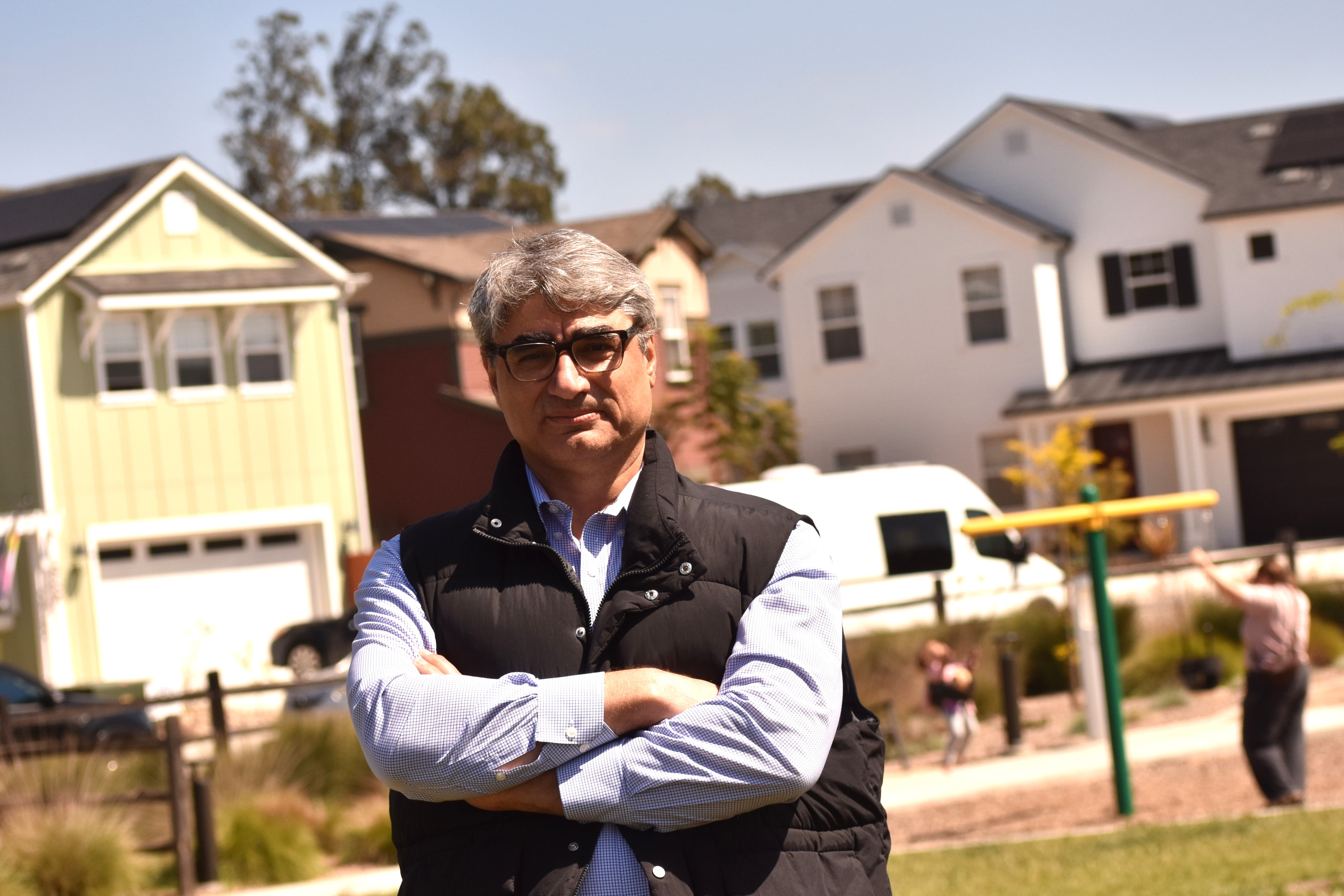
The Real Estate Initiative is a joint effort between the Orfalea College of Business and the College of Architecture & Environmental Design. This Real Estate Day, the second from the initiative, will feature a variety of expert speakers and panels with topics that explore trends, financing, infrastructure needs and more.
We asked Ghoddusi, who is also an associate professor of finance, about data centers.
“My expertise is in the resource economics, finance, and real estate side, rather than technical aspects of AI engineering,” he clarified. “For the technical parts, I am speaking at a general level and focusing on the economic, infrastructure and community implications.”
Data centers are suddenly a big issue for the upcoming midterms. How did they become such a hot topic, and why didn’t anyone seem to notice before?
Data centers have been part of the economy for decades. What changed is their scale, their power demand and the speed of the current buildout. During much of the cloud era, improvements in servers and energy efficiency allowed computing to grow very rapidly without a similar increase in electricity use. That made the physical infrastructure behind the cloud relatively easy for most people to overlook.
Generative AI changed the scale of the discussion. Training large models and serving millions of AI users require substantial computing capacity, and the newest campuses can require hundreds of megawatts of power. At the same time, U.S. electricity demand has begun growing again after a long period of very slow growth. Data centers are an important part of that new load growth.
Once large projects began showing up in utility plans and local land-use hearings, the politics followed. Communities started asking who pays for substations and transmission, how much water a project uses, what happens to nearby land and what the local economic benefit will be. That combination of local impacts, utility costs and a very rapid buildout has moved the issue into the midterm debate.
“If we didn’t have data centers, many of the modern-day applications that we run on our phone, computers, or TVs might not have functioned as smoothly. Thus, certain sectors of the US economy could not deliver services at the current rate.”
What do data centers require in terms of resources and labor?
Electricity is the most visible requirement. A large data center creates a steady, concentrated load and may require substantial investment in substations, transmission and generation. Lawrence Berkeley National Laboratory estimates that data centers could account for about 11.8 percent of U.S. electricity use by 2030 in its reference case, with scenarios ranging from 9.5 to 15.3 percent.
Let me give you an example to see the scale: A 200 MW hyper-scale data center will consumer almost the same amount of energy as the entire SLO County, each using almost 10% of Diablo’s energy output.
Data centers also need high-capacity fiber, suitable land — they need large parcels — cooling equipment, backup power systems and usual construction resources access during construction. Water use depends heavily on the cooling system and local climate, so I would always ask about the specific design rather than attach one water-use number to the entire industry.
Labor has two very different phases. Construction can be quite labor-intensive. Virginia’s legislative research agency reports that a typical building can have roughly 1,500 workers on site at the peak of construction. Once operating, the workforce is much smaller: Its example of a 250,000-square-foot facility has about 50 full-time workers. Those operating positions tend to be skilled and relatively well paid.
Data centers are very unpopular with the public right now. A recent Gallup poll showed that 70 percent of people don’t want them in their community. Why are they so unpopular?
Residents think about electricity bills, who pays for grid expansion, water use, land consumption, construction activity, generator emissions, noise and the character of the surrounding area. There is also a basic distributional issue: The local community experiences the physical footprint, while many of the benefits from AI and cloud computing are spread across the country or the world.
Communities want clear information about resource use, infrastructure costs and local benefits before a project is approved. California’s new 2026 laws move in exactly that direction by requiring more disclosure and stronger rules on the allocation of electricity and water infrastructure costs.
Data centers are also aesthetically unappealing, typically windowless, impersonal concrete structures. What types of communities might be best suited for a data center?
That is correct, and it is an issue that we discuss with my colleagues at CAED. But let’s first see the infrastructure need. A typical US data center usually is built on industrial land, with available transmission and substation capacity, high-capacity fiber, adequate water where the cooling design requires it, good construction access and enough separation from homes to manage noise and visual impacts.
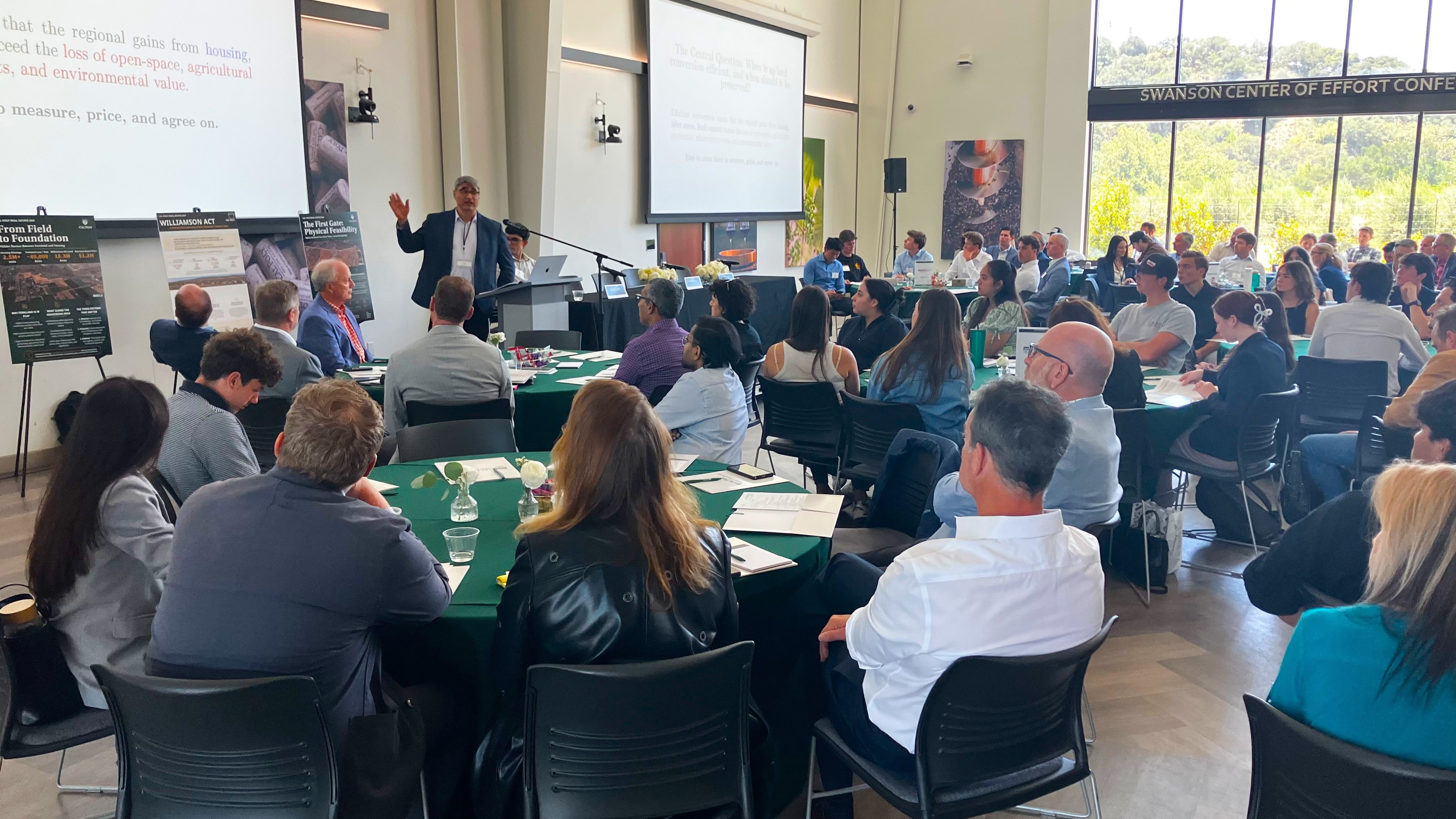
Existing industrial areas, brownfields and large sites near established energy infrastructure are often attractive candidates because the surrounding land-use pattern already accommodates large infrastructure. Communities should also think about opportunity cost. Land that has high value for housing, agriculture, tourism or a scenic corridor has a very different local value from an underused industrial parcel.
Design can also make a meaningful difference. Landscaping, setbacks, screening, building articulation and careful placement of cooling equipment and backup generators can reduce the visual and operational footprint. On the Central Coast, I would expect site fit and design quality to carry substantial weight in the approval process.
How might local communities react with zoning laws?
I expect local governments to become much more explicit about data centers in their zoning codes. Many existing codes were written when a computer facility looked more like an office building or a conventional industrial use. A modern hyperscale campus has a different profile in terms of power, equipment, noise, backup generation and infrastructure.
A common response will be data-center-specific standards: identifying appropriate industrial zones, using conditional-use review for larger projects, setting setbacks and landscaping requirements, adopting measurable noise standards and requiring disclosure of water, electricity and infrastructure needs. Some communities may also use temporary moratoria while they write those rules.
California has already moved in this direction at the state level. In September 2026, Gov. Gavin Newsom signed a package of seven data-center bills covering electricity, water, reporting and land-use review. The practical effect is that local governments will have more information when they evaluate projects, while utilities and developers will have clearer rules for allocating project-related infrastructure costs.
"Residents think about electricity bills, who pays for grid expansion, water use, land consumption, construction activity, generator emissions, noise and the character of the surrounding area. There is also a basic distributional issue: The local community experiences the physical footprint, while many of the benefits from AI and cloud computing are spread across the country or the world."
Given that data centers have become politically unpopular, do you expect a backlash or slowdown?
I expect more selective growth and a longer approval process in many places. In one of my ongoing research projects on this topic, we are seeing initial evidence that data center applications are moving to unincorporated areas where the approval process is easier. A site has limited value for a data center when the utility has a long interconnection timeline, or the local entitlement process carries substantial uncertainty. In other research with students, we found that stronger community opposition indeed makes the approval process longer.
At the same time, the underlying demand for computing capacity remains large and the amount of committed capital is substantial. I therefore expect geographic sorting rather than a uniform national slowdown. Projects will increasingly favor places with available power, clear rules, compatible industrial land and a local-benefit case that can be explained clearly.
The Central Coast is historically very protective of its open spaces and aesthetics. Given that, how would you expect political leaders to react toward data centers?
I would expect Central Coast leaders to be selective and very site-specific. This region places a high value on open space, agriculture, viewsheds, community character and resource sustainability. Those values are already embedded in local planning, so a large project on visually sensitive land or close to residential neighborhoods would receive very careful review. We already learned about those dimensions during the Inaugural Cal Poly Real Estate Day.
There is also an economic-development case that local leaders will want to evaluate carefully. Data centers can bring very large private investment, significant construction activity, local tax revenue where applicable and infrastructure investment. The key question is whether those benefits fit the particular site and whether the project carries the infrastructure costs it creates.
I don’t expect a large wave of Data Centers investment in SLO county. However, we may see a more receptive environment at the Northern part of Santa Barbara County due to multiple factors, including resource availability, historical energy facilities, and proximity to Vanderburg.
Above photo: Data centers are often large, windowless buildings that store IT equipment that helps power the internet.

