
Empathy as a Skill: How Cal Poly's Packaging Students Learn to Design Accessible Systems

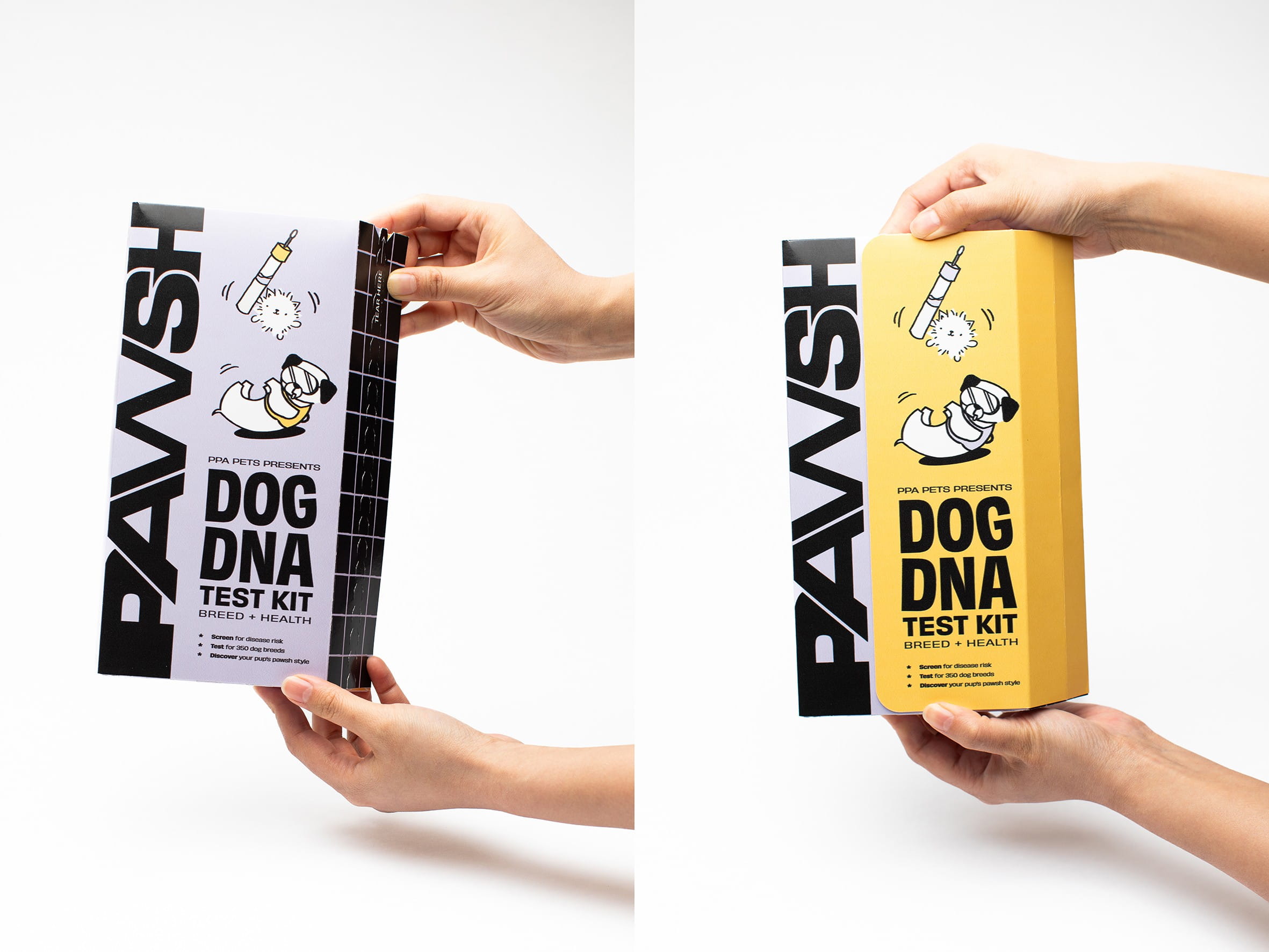
In Professor Irene Carbonell's fiber-based packaging class, ITP 4408, students have created packages for a dog DNA kit that features perforated tear strips so customers can easily access the product without tools. Meanwhile, the packaging also features high contrast text that clearly conveys instructions on how to use PAWSH, a fictional product which would allow consumers to research their pet’s pedigree.
Those designs were intended to make the product universally accessible and easy to use for a wide range of consumers, from both cognitive and physical perspectives, while also keeping the experience highly fun and engaging.
“When designing a new packaging system, it is important to remember that the package needs to work for all consumers, not just the average one,” said Dominic Corrente, a packaging student and structural designer for PAWSH.
While packaging goals have long emphasized a need to market, ship and protect products, students in Cal Poly’s Packaging program are also learning about accessible design, creating packages that can be easily used and understood regardless of the consumer's age, physical ability or cognitive abilities. To do this effectively, students must master not only the ability to understand human behavior and the task at hand, but also the ability to communicate with users through design in a way that is engaging, intuitive and effective.
While the typical consumer might take these things for granted, the packaging industry does not. The idea that things need to be packaged for everyone to physically access easily and efficiently is rapidly gaining traction, with efforts to make packaging accessible estimated to generate hundreds of millions of dollars in revenue over the next decade. Beyond improving functionality, accessible packaging enhances the overall consumer experience, strengthens brand perception and creates a clear business competitive advantage. In this way, more inclusive packaging is not only a thoughtful design approach but also a powerful strategy for elevating a brand and increasing profitability.
It’s these details that students at Cal Poly are taught to optimize. Maya Lojo, the president of Cal Poly’s Packaging Club, explained how even the smallest tweaks on something like a water bottle can completely change how people interact with it.
“There could be the smallest design change in this water bottle cap that makes it easier for someone to open, and that doesn't even have to do with a disability,” she said. “That could just do with anyone, whether it's their hand, thighs, shape, you know, strength -- things like that.”
The endeavor to make the packaging that consumers handle accessible for everyone requires taking into account an ocean of human conditions, needs and abilities. Cal Poly’s packaging students are taught to understand and balance these factors as part of the design process. However, accessibility is not only about accommodating physical and cognitive differences, it also requires designers to identify and define the potential pain points consumers might encounter while performing a task. By anticipating these challenges, designers can guide consumers through the experience with minimal cognitive effort, creating packaging interactions that feel intuitive, pleasant and satisfying.
Javier de la Fuente, ITPE area chair and associate professor, said this dance between identities is done through developing empathy as a tool in product development. He has worked in the field of accessible packaging for the past 20 years, graduating from Universidad de Buenos Aires in 1998 and receiving a doctorate from Michigan State University in 2013.
“We try to develop in students a sense of empathy,” he said. “So you are not designing for yourself, if you are at your peak, in your 20s, the peak of your abilities, strength, dexterity, and vision. You are more of an outlier than the norm in terms of users. That's the most challenging part. So how do you design for a user that is not like you?”
This process translates to a seemingly endless list of considerations, de la Fuente added.
“If we are going to design a package system, we make sure that it's going to be easy to use for not just the average consumer, because the average person doesn't really exist,” he said. “What if it is a kid? What if you are older? What if you have only one hand? What if this is too painful for a consumer?”
Considering all these realities, exactly what makes packaging accessible can be hard to pin down.
“You are trying to do it in a way that is not only feasible but also easy to understand and use,” de la Fuente said. “So that includes considering a broad range of people, people with disabilities, kids, women, men. So trying to design for… human diversity.”
While the current trend toward accessible and inclusive packaging is picking up steam, the effort toward these goals is not in its infancy. De la Fuente explained that the movement has been developing for decades, and the idea of inclusive design goes beyond just packaging.
“If we are going to design a package system, we make sure that it's going to be easy to use for not just the average consumer, because the average person doesn't really exist. What if it is a kid? What if you are older? What if you have only one hand? What if this is too painful for a consumer?”
Javier de la Fuente, ITP Chair
As far back as the ‘90s, especially with the passing of the Americans with Disabilities Act (ADA), architects began to consider who could engage with their creations.
The ADA is a law passed in 1990 which, in addition to other protections, required public and some private spaces to be physically accessible by people with disabilities.
“Universal design at that time was the trend in the U.S. for this type of initiative,” de la Fuente said. “That's why after the Americans with Disabilities Act; we started to see accessible ramps in our public buildings or things like that. So that was a universal design movement. If we are going to design a building for the government, it needs to be accessible for all Americans.”
The overarching idea of inclusivity, he added, expanded to packaging design over the last 20 years. Companies like Google and Microsoft, for example, are adopting internal guidelines toward ensuring their packaging incorporates inclusive design, even openly sharing these guidelines with other companies in the industry.
“So that is kind of new and very refreshing,” de la Fuente said. “And I think that started to happen probably five years ago or so. I think that's what is reviving the trend.”
This approach benefits both consumers and brands. For the consumer, it improves product satisfaction and makes the consumer experience feel more thoughtful and intuitive. For brands, inclusive packaging can strengthen loyalty, broaden market reach, reduce negative user experiences and create a meaningful point of differentiation in a competitive marketplace. Ultimately, it is simply good design, and that means good business.
As students grapple with these trends, de la Fuente believes they develop skills that are foundational to being a successful professional.
“If you're going to be a good designer, a good engineer, you need to be able to observe and empathize,” he said. “On top of knowing about technology, what is technically and economically possible, you must understand not only what people need, but also where they struggle, what they expect and how the product can guide them through an experience in a way that feels effortless and pleasant.”
Top photo: Packaging student Eddie Chow and Izack Padilla work on a project for their product, Dat. (Photo: Jahan Ramezani)

